
Heatherlands Primary School

Part of Coastal Learning Partnership
Careers Related Learning

Career-related learning helps primary pupils to learn about the world around them, broaden their aspirations and challenge stereotypes. Quality career-related learning in primary school provides exposure to ideas that pupils may not get elsewhere.
Research shows us that starting career-related learning early is important. Pupils start to adopt stereotypes based on gender, ethnicity and social background from an early age. Such stereotypes can go on to influence career and subject choices.

Bea Collis
01202 743918
Careers Day 2026.
Today we were visited by 3 ex-Heatherlands pupils, an engineer and a stuntman. The children in KS2 met them all in assembly and then Year 6 spent the morning finding out more about these careers. The alumni are in a book we have created all about those who came to Heatherlands as a child. Our alumni were a paramedic, an electrician and a politician. The children in year 6 loved their workshops but overall they loved meeting Lewis Young, a stuntman, who has been in Game of Thrones, Star Wars and Spiderman to name but a few films! He taught them how to throw themselves on a crash mat and even Mr Parrett and Ms Waugh had a go!
We are a now a Gold Primary Futures school and are proud of our careers curriculum and the work that goes into ensuring our children have the skills, knowledge and understanding needed for them to make choices about their future career goals.


Careers Day Assembly 2026
Heatherlands Alumni 2026


At Heatherlands we are embedding career-related learning into our curriculum, providing opportunities to broaden our pupils’ aspirations and challenge stereotypes they may hold; which may ultimately have a positive impact on their future life choices. Career-related learning in primary schools is not about setting pupils down a specific path, but ensuring they understand that there are many options open to them.
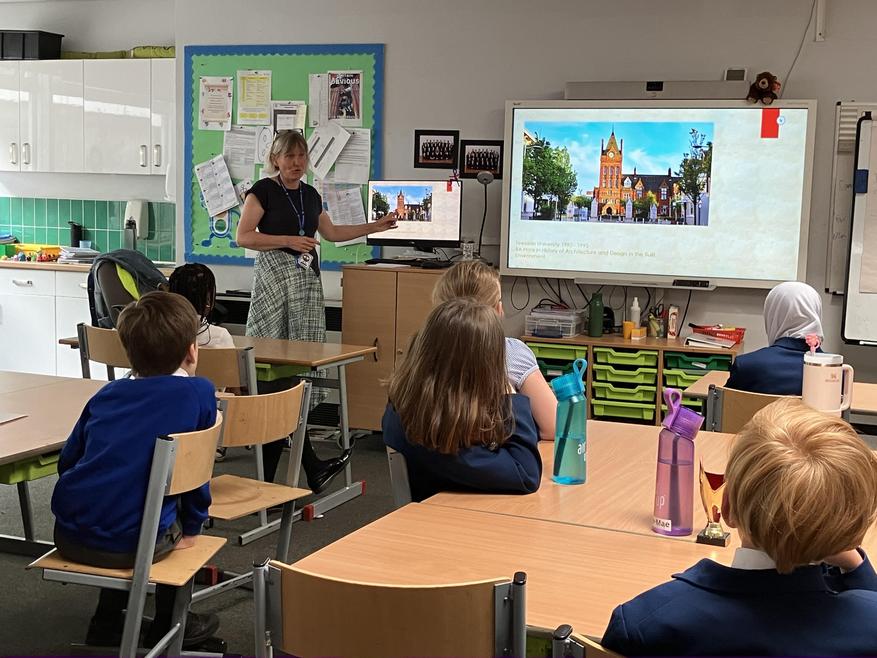
Impact on pupils
- Provides exposure to ideas that pupils may not get elsewhere
- Supports pupils to understand how the skills and knowledge they gain in school will be relevant throughout their life
- Addresses different sectors and skills to help you to broaden pupils’ horizons
Careers Related Learning Overview
Top 10 jobs teens want
For the third consecutive year, almost one in 10 teenagers chose doctor as their preferred profession.
| Rank | Careers |
|---|---|
| 1 | Doctor |
| 2 | Engineer |
| 3 | Teacher |
| 4 | Lawyer |
| 5 | Nurse |
| 6 | Footballer |
| 7 | Performer/Arts (New) |
| 8 | Vet |
| 9 | Police Officer |
| 10 | Pilot |
Eighty-seven percent of teens surveyed said that they were confident that they could get their desired job, a 2% increase on last year.
Top 10 desirable companies for teens
When asked which company or organisation they’d choose if they could work anywhere in the world, the NHS was number one for the third year running.
Google kept second place, whilst Apple remained in third, however, last year's fourth place - NASA - dropped down the list to number seven, with new entry Business/Finance replacing it in fourth.
There were two other new entries on the list, Media/Entertainment and Microsoft.
| Rank | Careers |
|---|---|
| 1 | NHS |
| 2 | |
| 3 | Apple |
| 4 | Business/Finance (new) |
| 5 | Football club |
| 6 | Media/Entertainment (new) |
| 7 | NASA |
| 8 | Tesla |
| 9 | Self-employed |
| 10 | Microsoft (new) |
AI and the future of jobs
A big focus of the 2026 survey was AI, and it has thrown up some interesting results. More than a third (37%) of those surveyed think that AI will reduce the number of jobs available to them in the future.
Meanwhile, just under two thirds of students (66%) say that they would use AI to help them get a job, with 27% of those asked saying that they would use AI for help with a CV, cover letter or application.
Careers coach, Mark Anderson, says: "No one knows exactly how AI will shape our future. What is clear is that now is not the time to bury your head in the sand. The best response is stay curious, informed, adaptable and aware of the impact of AI on the world of work." You can read more about what Mark said about the future of AI careers here.
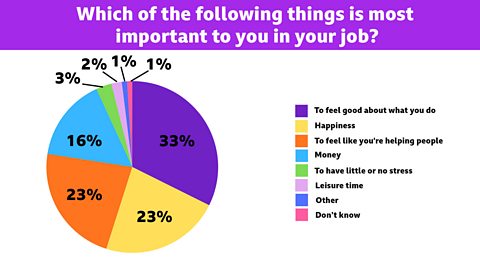
What matters to young people about the world of work?
Teenagers once again said 'to feel good about what you do' was the most important thing about any future job. 'Happiness' was second, while 'money' dropped a place to fourth, replaced in third by 'to feel like you're helping people'.
The majority (58%) of young people surveyed said they would not be willing to pursue a job that they did not enjoy even if it was well paid.
When asked what would make them want to work somewhere the most, 'opportunities for training and development' was the most popular answer (32%), a 3% increase since last year. Flexible working hours moved up to second place. Whilst having the best salary dropped to third.
How do young people view their futures?
Thinking about their options for when they're older, over half (57%) of respondents in the survey, conducted by Survation on behalf of BBC Bitesize Careers, said that going to university was the route that appealed to them most, with 19% choosing doing an apprenticeship as their top choice. Fourteen percent said they'd like to do a job that doesn't require an apprenticeship or university degree.
More than eight out of 10 teens (87%) surveyed said that they were confident that they could get their desired job.
When asked which factors they thought were most important for getting a good job, half of respondents said 'hard work'. 'Getting good exam results' was the second most popular answer, chosen by just over a quarter (26%) of those surveyed. 40% of teens surveyed said your background always or often affects the likelihood of you getting the job you want.
Survey information
Survey conducted by Survation between 6 - 26 October 2025
How to become an aerospace engineer.
Meet Ben. He's 27 and lives in north Yorkshire. He's the co-founder of a company called StratoBooster. They test space launch systems. Part of our Bitesize world of work series.
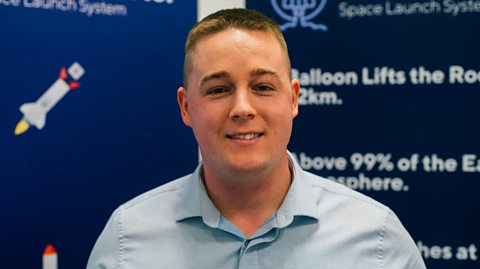
My favourite part of this job is when we do rocket testing - it's always fun to see a rocket go off!
What does your job involve?
StratoBooster, the company that I co-founded, runs a small space launch system. We use balloons to take small rockets (about 30 - 40 cm long) up to a high altitude and send small satellites into space.
I deal with a lot of the technical engineering, as well as the business side, such as writing applications for funding, dealing with finances and clients.
Day-to-day, I do a lot of computer software testing and analysing potential products. I use software to test the rockets in flight, looking at things like temperature and pressure. I also use another software to test which materials work best for the rockets.
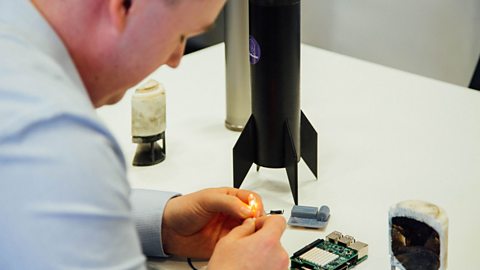
Ben uses computer software to test rockets.
What skills do you use in your job?
I use a lot of the maths skills that I learnt in school, for example, algebra, statistics and trigonometry. I use my Physics knowledge too, as well as the Design and Technology that I learnt at GCSE. Computer skills are also important.
In terms of soft skills, time management is really important – I try and break up my tasks throughout the day. I also use leadership and people management skills as I manage interns and supervise engineers. I need good organisational skills to keep in contact with so many people.
Was this a job you always knew you wanted to do?
No! My Dad was in the Royal Air Force, so I always thought I’d be in the military. For personal reasons, I couldn't do this, so I became a lifeguard. I did this job for many years, but found that it wasn't right for me.
So, I started military training with the Royal Marines, but after three months I realised that that wasn't the right fit either. I decided that I wanted to do military aircraft engineering instead. To do this I would need to go to university.
At university, I was involved in managing a student project. We wanted to enter a competition and our company has developed from that.
What was your educational career path?
I took History, Geography and Resistant Materials at GCSE. I then went to college and did a BTEC in Uniformed Public Services with the aim of joining the armed forces, but this didn't happen.
Later on, I tried Royal Marine Training, but left to go to university when I had a better idea of what I wanted to be. I did an engineering foundation year and am now in my final year studying Aerospace Engineering.
How to become a farmer.
Meet Aimee, 21, from the Shetland Islands in Scotland, to find out more about life as a farmer. Part of our Bitesize world of work series.
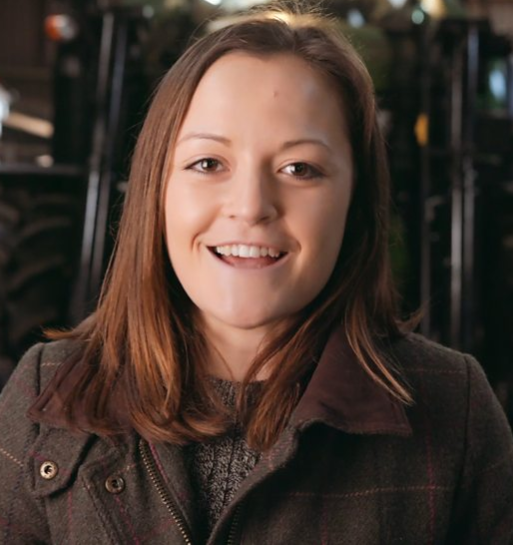
Young people should definitely get involved in agriculture.
- Aimee runs a farm with her sister - they look after cows and sheep and produce beef and lamb
- Aimee juggles farming with studying and recently completed a degree in Agriculture
- She uses Maths to keep track of the farm's accounts - for example, how much beef they sell each month
- Her farm is very big and runs across 300 hectares. One hectare is the size of an international rugby pitch or Trafalgar Square in London!
What to expect if you want to be a farmer
- Farmer average salary: £21,000 to £50,000 per year
- Farmer typical working hours: 39 to 41 hours per week
What qualifications do you need to be a farmer?
You could get into this role via a university course, a college course (such as a Level 2 certificate, a Level 3 Diploma, or a T-level in Agriculture, Land Management and Production - England-only, from Sept 2023), an apprenticeship, or by working towards the role by working as a supervisor, unit manager or assistant manager, and then moving into farm management.
Meet Hollie, a primary school teacher in Glasgow.
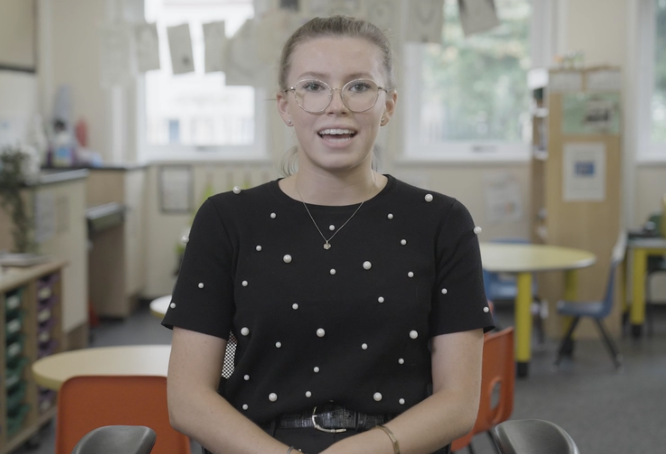
One reason Hollie became a teacher was to help children learn about the world around them and understand what actions they can take to protect it.
Find out about Hollie's career and how she helps children to learn about the environment.
"It’s an extremely rewarding job and being able to see small changes that are going to take a child somewhere fantastic is what teaching is all about."
Hollie, teacher
- Hollie completed a Master of Arts in Education. There are other routes into teaching, but Hollie always knew she wanted to be a primary school teacher and applied for four year university course.
- Learning for Sustainability is an education initiative in Scotland which encourages outdoor learning, global citizenship and social welfare. Teachers in Scotland should be able to demonstrate Learning for Sustainability in their lessons and all students are entitled to learn about the environment.
Green education 
Education is vital to encourage young people to take action on the environment.
Teachers need to be able to support children to understand issues, whilst communicating challenging and sensitive subjects in a way that helps children to feel empowered and inspired.
Teachers can also model this behaviour and ensure that schools adopts sustainable practices.
The environment affect every subject we learn about, so teachers like Hollie need resources to make learning fun and accessible.
With climate and the environment becoming more central to curricula across the UK, demand for skills in this area are likely to grow.
Salary and hours

- Primary school teacher average salary: £25,714 to £41,604 per year
- Primary school teacher typical hours: 37 to 45 hours per week
Entry requirements

- Undergraduate degree: You could get into this role by doing an undergraduate degree that leads to qualified teacher status (QTS), such as a Bachelor of Education (BEd). You'll usually need GCSEs (or equivalent) at grades 9 to 4 (A* to C), including maths, English and science and two to three A-levels or equivalent for a degree
- Postgraduate study/training: If you have a degree in a curriculum subject without QTS, you can qualify as a teacher by completing a postgraduate teacher training course at university or on a school-based training programme
- Apprenticeship: You can also get into this career through a teacher higher apprenticeship, if you have a relevant degree and want to teach 5 -11-year-olds. You'll usually need GCSEs (or equivalent) at grades 9 to 4 (A* to C), including maths, English and science, and a degree in a relevant subject
- Work: You could also work towards this career by starting as a teaching assistant and doing a part-time degree. You could then move onto a postgraduate teaching course to get qualified teacher status.
How to become a motorbike mechanic.
Meet Ewan, 20, from south London and find out more about life as a motorbike mechanic at a company called Ace Classics. Part of our Bitesize world of work series.

"My job is most definitely my passion."
- Ewan grew up loving classic cars – his first car was a 1957 Austin A35
- He developed his knowledge beyond cars by completing a Level 3 Extended Diploma in Agricultural Engineering where he learnt about tractor engines
- The company Ewan works for specialises in vintage motorbikes. He services engines, completes repairs and talks to customers.
Another name for a motorbike mechanic is a motorcycle mechanic.
What to expect if you want to be a motorcycle mechanic
- Motorcycle mechanic average salary: £18,000 to £30,000 per year
- Motorcycle mechanic typical working hours: 38 to 40 hours per week
What qualifications do you need to be a motorcycle mechanic?
You could get into this role via an advanced apprenticeship, a college course, or by applying directly if you have relevant experience. College courses include a Level 2 and Level 3 Diploma in Motorcycle Maintenance and Repair Competence or a T-level in Maintenance, Installation and Repair for Engineering and Manufacturing (England-only, from Sept 2022).
We are working alongside Bournemouth university and the Dorset Careers Hub to support our children to dream big about their future careers.
https://www.dorsetcareershub.co.uk/start-small--dream-big
If you, or anyone you have contact with are interested in supporting our careers related learning programme - from EYFS to Year 6, please contact the school office.
We are always looking for volunteers to come in and talk about their careers and career paths and to introduce the children to the opportunities available to them within the local commutiy and beyond.
42B of the Education Act 1997, often known as the 'Baker Clause' requires all academies and maintained schools to ensure that there is an opportunity for a range of education and training providers to access all pupils in year 8 to year 13 for the purpose of informing them about approved technical education.